

“Some days it is all just almost too much to handle. Like, where do I even focus. I have never pulled anything like this off before. I do not know how to do it or where to even start.”

This was a conversation I had recently with an entrepreneur friend, someone who has already figured most of it out to the point of making serious stable revenue and who always seems to have it completely together from the outside.
So having this conversation was definitely an eye opener, in two ways.
First, tg I am not the only one who feels like they are doing something completely new and borderline crazy with no previous experience to fall back on.
Second, and maybe more importantly, this is a feeling I need to learn to get comfortable with because it is not going away. It comes in waves and you just have to keep going anyway.
No matter whether you are already building your first high stakes business or seriously thinking about making the jump from corporate, this tends to be the part nobody prepares you for.
The moment the structure disappears and you are completely on your own.
Which means a few very specific things.
No one is coming to save you.
You need to learn to manage others and yourself, and fast.
Nobody is going to run a performance review for you so you have to learn to identify your own blind spots and limits.
The decision fatigue is real but you still have to execute with urgency and without hesitation.
I talked through my own experience with my friend on all of these and the advice he gave me is something I think is valuable to anyone whose progress is mainly self-driven.
So here is the conversation we had.
Every Sunday I publish an episode of The Build, a series following my journey of building from scratch and more than anything trying and learning. In the previous episodes I shared the story of how I got to entrepreneurship, what the reality of running a side business alongside a full time job actually looks like, how the failures are an inevitable part of the journey, and how the first months of building Unelma have been and what is the brand strategy behind it. In this one I dive into what nobody really prepares you for when you start building something: learning to manage yourself when there is no one else to tell you what to do or how to spend your time.
On Wednesdays, I write about creating your path - style, mindset and career wise. I would love to have you follow along!
No one is coming to save you
The first thing is to face and accept reality.
There is a lot of glory around quitting your corporate job and going after your idea, and not so much about what actually happens the Monday after.
If you have spent years inside a structured environment you have been training for a very specific game.
Rules, frameworks, a manager to approve things, deadlines set by someone else, a time to clock out. You get good at operating inside the system without ever realising how much your brain has been conditioned to rely on that structural safety net.
You think you have autonomy and ownership but at the end of the day, do you really?
The moment you step outside of it none of that exists anymore.
No rulebook, no approval process, no HR course to complete, no one to tell you what to do next or back you when things go wrong. Just you and whatever the next decision is.
What makes it hard is not the workload. Rather, it is the absence of any external signal telling you that you are on the right track.
The promotions and performance reviews are gone and all you have are outcomes that are entirely yours to own.
And that is where most of us freak out a little, not because we are not capable but because nothing in the previous chapter prepared us for managing the whole thing without a map.
So I asked my friend directly: how do you deal with all of it? How do you know where to focus, how to manage your time, make decisions, and negotiate with people who are far more experienced than you? How do you create that CEO kind of assurance and mentality?
You are now your own manager
Once you accept that you are on your own, the second thing that tends to overwhelm most people is something as simple as time management.
What should I do today. How do I prioritise. Everything feels important. Where do I even start???
Nobody tells you what to work on, nobody prioritises for you, and nobody notices if you spend three hours on something that does not matter.
You have to figure that out yourself every single day.
What my friend said on this was pretty simple.
If you have no business, you have no business.
Before anything else you need to get the basics right.
Is your offering clear? Do you know your numbers? Do you have clients in the pipeline or at least know how to get them and who they are? If not, everything else is just decoration.
The overwhelm in this comes from wanting everything to be perfect while not yet having the knowledge or means to make it so.
And the answer is not to do more.
It is to clearly separate what actually moves the business forward from what is just polishing and nice to have.
Build your offering, your client base, and your operations to a minimum working point first. Everything else can wait.
Practically that means planning your time on a weekly basis and revising it daily, avoiding multitasking, and focusing on one thing at the micro level each day.
And that already requires far more proactivity and self management than most corporate roles ever demanded. So, if you were not good at it before, now you will have no choice than become good at it.

Nobody runs your performance review
Personally I think the hardest part is evaluating yourself and recognising your own blind spots before they cost you.
When there is no one to catch your mistakes you have to build your own feedback loop, and that means being honest with yourself in a way that is surprisingly difficult when the stakes are entirely yours.
You will avoid certain things because everyone does.
The uncomfortable call, the financial model you are not sure about, the decision you keep postponing because you are not ready to know the answer.
In corporate life someone eventually forces your hand. In entrepreneurship nobody does, unless you have a co-founder with the right match, which genuinely helps more than most people realise.
But even then you have to force your own hand regularly and on purpose.
Seek outside perspective, ask people who will actually tell you the truth rather than what you want to hear, and build in moments to step back and look at what is really happening versus what you want to believe is happening.
That gap is where most people quietly lose ground without ever realising it.
And then there is the other side of this that my friend was very direct about.
You need to learn to be tough.
If you give in too easily people will take advantage and if you compromise too much they will always push for more. You need to set boundaries from the very first conversation and mean them.
If you are someone who does not enjoy confrontation this is hard.
It does not mean you need to be a jerk but you do need to stand behind your position.
Practically, you mostly learn this through trial and error.
But to build that perspective faster, something like Never Split the Difference by Chris Voss is worth reading, or simply talking to someone who negotiates well and asking them how they approach it.
What also helps, and this might sound strange, is having a business alter ego.
A version of you that handles the tough calls and negotiations while the real you stays intact in private.
You are not becoming a different person. Instead, you are just reminding yourself that in a business context it is the alter ego stepping in, which makes it easier to hold the line without feeling like you are compromising who you are.
The decision fatigue is real but you still have to move
And finally, how to make decisions with limited information when you genuinely do not know which direction to go.
The challenge is that pretty much every decision falls on you: the big strategic ones and the completely mundane ones.
What software to use, what email to send first, whether to take that meeting. All of it, all the time, with no one to sanity check you or share the load.
And that adds up faster than you expect, but the way through it is not making fewer decisions but making the important ones when your energy is highest and letting the small ones be small.
Not everything deserves the same amount of thinking and most things deserve far less than you give them.
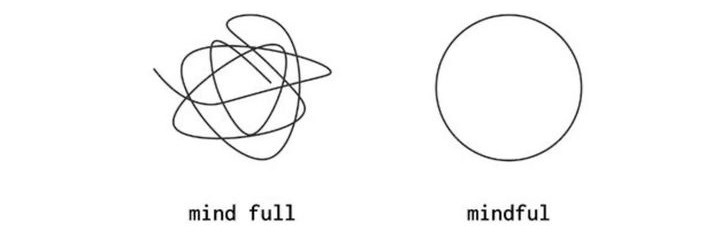
What my friend said on this one was simple but genuinely powerful.
Sleep well and make the complex, critical decisions in the hours when your mind is fresh and your energy is high. And never make important business decisions after 10pm. Do not trust your mind in business at night.
Simple advice but the kind that will save you from a few unnecessary breakdowns.
The decisions that feel impossible at midnight often look completely different in the morning, and the ones you make when you are exhausted and overwhelmed are rarely the ones you would stand behind a week later.
What actually helps
So as you can see, the advice from my entrepreneur friend on how to manage all of this was not about a 5am morning club routine with sound baths and affirmations.
It is about accepting the absence of any pre-approved structure and building your own.
Pretty much anything can work if you make it work, but what everything needs to work is clear priorities, a system for when and how things get done, honest outside perspective that challenges you, thick skin for the negotiations, and the willingness to create a tougher version of yourself for the moments that require it.
And please, sleep well and understand how your energy flows throughout the day and work with that rather than against it.
As you can see, none of these are groundbreaking new ideas. But they are simple, actionable things that actually affect your performance and confidence when you are doing something new, overwhelming, and entirely your own.
At the end of the day, as much as we love colour coded systems, productivity software, and aesthetically pleasing planners, usually all you actually need is a pen, a piece of paper for clarity, and some thickness in your character for the negotiations.
And my friend still feels the overwhelm every time something new comes up that he has never done before.
The feeling does not go away. You just get better at not letting it stop you.
You just have to keep going long enough to become the person who knows how to do this. And the only way to become that person is to already be doing it before you feel ready.
So keep going.
x Maria